
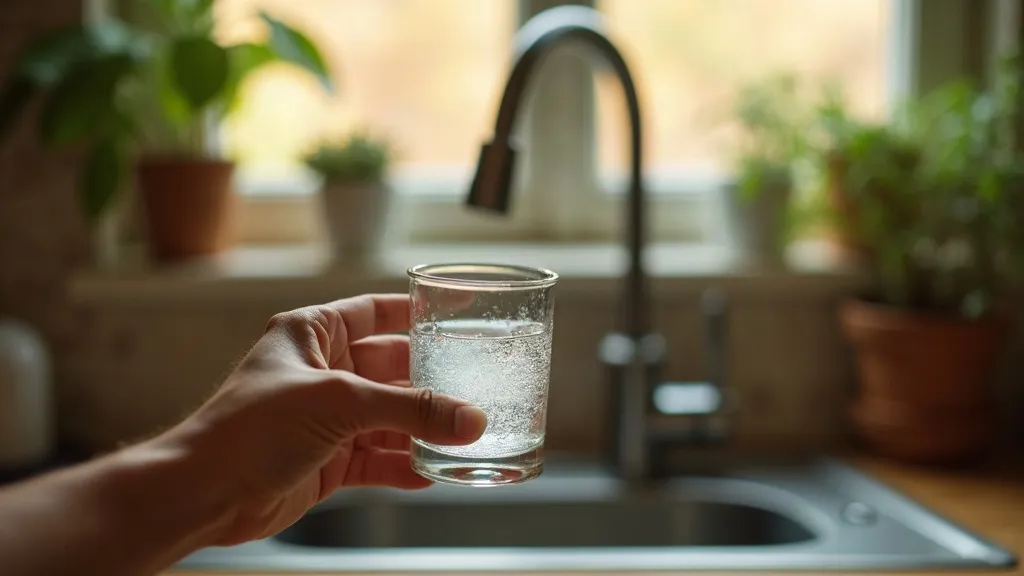
Most of us turn on the tap and assume what comes out is fine. And usually it is. But the Flint, Michigan lead crisis showed how wrong that assumption can go — and according to the Environmental Working Group, many common contaminants found in US tap water sit well below federal limits yet above what independent scientists consider safe for long-term exposure. Your senses are often the first line of defense. Here are eight signs your water may deserve a second look.
1. The water looks cloudy
Drinking water should always be clear. Dissolved minerals are measured in parts per billion — far too small to see — so if your glass looks milky, hazy, or has visible particles floating in it, something is off. Sometimes cloudiness is just trapped air that clears from the bottom up within a minute. If it doesn't clear, don't drink it. Without a lab analysis there's no way to know what you're looking at, so stick to filtered or bottled water until it's identified.
2. It smells like a swimming pool
Water utilities add chlorine to kill bacteria, and a faint whiff is normal. But a strong bleach smell can mean over-chlorination, or chlorine reacting with organic matter in the pipes to form byproducts like trihalomethanes. According to the CDC, these disinfection byproducts are worth minimizing over the long term. If the smell persists, tell the utility and consider an activated carbon filter.
3. There's a rotten egg odor
That unmistakable sulfur smell usually points to hydrogen sulfide gas, which occurs naturally in some groundwater or is produced by bacteria in your water heater or well. At low levels it's more unpleasant than dangerous, but it may signal bacterial growth you don't want in your glass. Quick test: if the smell only comes from the hot tap, your water heater is the likely culprit. If it's from both, the source is upstream.
4. It tastes metallic
A metallic or bitter taste can be a sign of iron, manganese, zinc, or — more concerning — copper or lead leaching from older plumbing. Lead has no safe exposure level, according to the EPA, and it's especially risky for children and pregnant women. Homes built before the mid-1980s with original pipes or solder are the usual suspects. If your water suddenly tastes like pennies, don't wait: get it tested before drinking more of it.
5. The water runs yellow, brown, or orange
Discoloration usually means rust — from aging municipal mains, a deteriorating well, or your own galvanized pipes. Rust isn't typically a health emergency, but the conditions behind it can carry other contaminants along for the ride. If the color clears after running the tap for a few minutes, the problem is likely in your home's plumbing. If it never clears, call your water company.
6. Blue-green stains appear on sinks and tubs
Those turquoise rings around your drain aren't just cosmetic. They're a classic sign that acidic water is corroding copper pipes — and that copper is ending up in your cup. Over time, elevated copper intake can cause stomach upset, and the same corrosive water can pull lead from solder joints too. It's fixable, but only once you know it's happening.
7. There's an oily film or sheen on top
Fill a clear glass, let it sit, and look at the surface under good light. A rainbow sheen or greasy film can indicate petroleum or other chemical contamination — sometimes from industrial activity, fuel storage, or a compromised well seal. This one is a hard stop: don't drink it or cook with it, and contact your local health department right away.
8. Your household has recurring stomach trouble
Contaminated water doesn't always announce itself with a smell or a color. Microbes like Giardia, Cryptosporidium, and E. coli are invisible, and the CDC estimates millions of Americans get sick from waterborne germs each year. If several people in your home have unexplained nausea, cramps, or diarrhea that comes and goes — especially after heavy rain, or if you're on a private well — your water deserves a test. And if symptoms are severe or persistent, talk to your doctor.
What to do if you spot a sign
- Get it tested. Your local water utility, county health department, or a state-certified lab can run an analysis. Private well owners should test at least once a year.
- Read your Consumer Confidence Report. Public utilities mail this annual water quality report — it's usually posted online too.
- Filter smart. Reverse osmosis systems remove the broadest range of contaminants; activated carbon handles chlorine, odors, and many chemicals. Match the filter to what your test finds.
- Use bottled water in the meantime if contamination is suspected but not yet identified.
While you're rethinking what you drink, it's also worth checking whether you're getting enough water in the first place — and whether some of it is quietly being replaced by too much soda.
FAQ
Is cloudy water always dangerous?
Not always. Tiny air bubbles can make water look milky but harmless — it will clear from the bottom up within a minute. Cloudiness that doesn't clear, or comes with particles, odor, or taste changes, should be tested.
How do I test my tap water?
Start with your water utility's annual quality report, then order a test from a state-certified laboratory if you want specifics. Hardware-store kits screen for basics like lead and chlorine, but lab tests are far more accurate.
Does boiling water make contaminated water safe?
Boiling kills most bacteria, viruses, and parasites, but it does not remove lead, chemicals, or heavy metals — and it can concentrate them as water evaporates. It's a fix for germs during a boil-water advisory, not for chemical contamination.
Who is most at risk from contaminated water?
Infants, young children, pregnant women, older adults, and people with weakened immune systems are the most vulnerable to both microbes and contaminants like lead. If anyone in these groups shows symptoms that may be linked to drinking water, talk to your doctor promptly.