
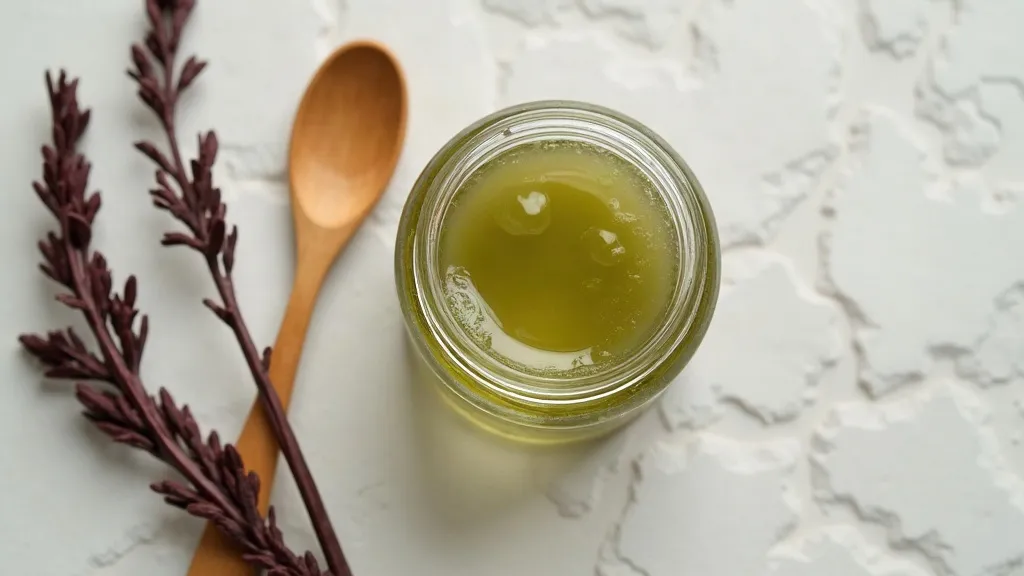
“Sea moss has gained popularity as a functional food,” a group of food scientists at Cornell AgriTech writes in a paper published in the November issue of the Journal of Food Protection. The sentence is flat, and it is the entire justification for what follows. Because, the authors add, information on the microbial quality, the physical and chemical characteristics and the heavy metal concentrations of what is actually on sale “remains limited,” they bought 66 sea moss products from major U.S. online retailers and put them through a laboratory.
The results are a study in spread rather than a verdict. Counts of bacteria varied by orders of magnitude between products. The gels ranged from sharply acidic to close to neutral. Some were nearly sugar-free by measurement and others were not remotely so. Arsenic, cobalt and mercury turned up in dried samples; in the gels, two of the three sat below the limit of detection and mercury appeared only in trace amounts.
The audit also has a hole in it, and the hole is the most interesting part.
What 66 products look like under a lab bench
Of the 66 products, 53 were dried sea moss — the fronds and powders — and 13 were gels, the ready-to-eat jars that go into smoothies. The Cornell team measured water activity, which is a measure of how much water in a food is available to support microbial growth, along with pH, sugar content by refractometry and a standard panel of microbial counts.
The dried products behaved like dried products. Water activity ran from 0.33 to 0.76, averaging 0.59 — a range consistent with shelf-stable material. The gels did not. Their water activity ran from 0.74 to 1.00 with a mean of 0.98, which is the water activity of something very close to fresh. Their pH spanned 2.71 to 7.05, a range that runs from about the acidity of lemon juice to something mildly alkaline. Measured sugar content ran from 0.80 to 46.10 °Brix, a spread wide enough that some of the jars are essentially seaweed in water and others are closer to a sweetened preserve.
That matters less as a scandal than as a description. Two jars labelled the same thing are not the same product, and the paper’s own conclusion follows from that: the variability “highlights the need for additional research and evidence-based guidance to support appropriate processing, storage, and handling practices.”
The word “presumptive” is doing real work
Mean total plate counts came in at 4.30 log CFU/g for dried products and 3.92 log CFU/g for gels, with yeast and mould means of 3.23 and 3.60 log CFU/g respectively. Those are logarithms, so the apparent closeness understates the actual differences between individual samples.
The organism list is where a reader is most likely to over-read the paper. Presumptive Bacillus and Staphylococcus were recovered from both product types; presumptive Escherichia, Salmonella, Listeria and Vibrio were detected less often. When the team sequenced a selection of isolates, the identifications included Bhargavaea, Exiguobacterium, Staphylococcus, Salmonella, Cronobacter, Bacillus and Escherichia species — and neither Listeria nor Vibrio appeared among the isolates that gave interpretable sequence results.
Two things follow. The first is that “presumptive” means what it says: a colony that looks like the organism on a growth plate, not a confirmed identification. The second is that the paper reports counts and identifications without comparing them to any limit, without assessing whether any product was unsafe, and without linking a single product to an illness. It is a market survey. The authors’ own framing is that the field needs standards, not that shoppers were harmed.
Metals: detected is not the same as unsafe
Arsenic, cobalt and mercury were detected in the dried sea moss. In the gels, arsenic and cobalt fell below the limits of detection, and mercury was present at trace concentrations. The paper reports detection; it does not report an exposure assessment, and it does not claim any product exceeded a regulatory threshold.
That distinction is one the FDA makes explicitly in its own guidance on arsenic in food. “Testing results that detect arsenic do not necessarily mean the food should be avoided,” the agency writes, adding that because many nutritious foods can also carry contaminants, eating a variety of foods across the main food groups limits exposure from any single one. The FDA also states that it monitors and regulates arsenic in foods, dietary supplements included, and that manufacturers are legally responsible for significantly minimising or preventing chemical hazards.
Seaweed sits in an awkward place for that framework. It concentrates elements from the water it grows in — which is why the same plant can be a rich source of iodine and a carrier of arsenic and mercury at once. Neither the FDA page nor the Cornell paper quantifies what a typical serving delivers.
The number that wasn’t measured
Seaweed’s signature nutrient is iodine. MedlinePlus describes kelp as the most common vegetable harvested from the sea and a rich source of it, and lists seafood, iodised salt and dairy as the other main contributors. The recommended daily allowance is 150 micrograms for adolescents and adults, 220 micrograms in pregnancy and 290 micrograms during lactation.
The Cornell audit did not measure iodine. It tested microbial quality, water activity, pH, sugar content and three metals. So the 66 products were assessed on almost everything except the nutrient most people associate with seaweed — the one where the margin between a serving and too much is not especially wide.
Three infants, one soup
An October case series in JCEM Case Reports shows why that margin is worth measuring. Pediatric endocrinologists at Cohen Children’s Medical Center in New York describe three infants of Korean descent with transient hypothyroidism attributed to maternal consumption of seaweed soup, miyeok-guk, a traditional postpartum food.
The iodine arithmetic in the paper is stark. Seaweed iodine content ranges from about 16 micrograms per gram in nori to more than 8,000 micrograms per gram in certain kelp products, varying with species, origin and processing. The authors summarise the American Thyroid Association’s 2026 guidance as roughly 250 micrograms of iodine daily in pregnancy and lactation, with sustained intake above 500 to 1,100 micrograms a day to be avoided — and note that Korean postpartum women frequently exceed 2,000 micrograms daily, with more than 93% eating the soup every day.
The three cases illustrate how differently that presents. One preterm infant screened normal on day three of life and was profoundly hypothyroid by day 23, recovering fully once the soup stopped. A second was subclinical at day 11 and had an irregular course before proving transient at three and a half years. The third was treated for six years as presumed congenital hypothyroidism — until a dietary history taken by a new provider revealed soup up to four times a week during pregnancy and the postpartum period, after which levothyroxine was tapered and stopped and thyroid function stayed normal.
Three cases are the weakest form of clinical evidence, and the authors are candid about the gaps: maternal iodine intake and breast-milk iodine were never quantified, and no thyroid imaging was done, so congenital causes cannot be formally excluded. What the series does document is that a normal newborn screen does not rule out a later iodine-driven rise, and that a very high initial TSH does not prove permanence.
Where the guidance leaves the shopper
For supplements, the FDA’s position is unambiguous. “The FDA does NOT have the authority to approve dietary supplements for safety and effectiveness, or to approve their labeling, before the supplements are sold to the public.” Firms are responsible for evaluating safety and labelling before marketing, and the agency can act against adulterated or misbranded products after they reach the market.
That is the structure around a category whose products, per the Cornell data, differ enormously from jar to jar. A shopper holding two sea moss gels has no way to know from the label whether the contents sit at pH 2.71 or 7.05, or whether water activity means the jar needs refrigeration.
What we did not find
No clinical trial of sea moss for any health outcome. No contamination limit specific to sea moss products in either document. No evidence in the audit that any tested product made anyone ill, and no exposure assessment converting its metal detections into a risk estimate. No iodine measurement of the 66 products — so nothing here supports or refutes the iodine content a label implies. And no recommendation, in either paper, that anyone start or stop eating seaweed.
If you are pregnant, breastfeeding, or shopping for an infant or young child, the iodine question is a conversation to have with a healthcare professional rather than a product to research alone. Nothing here is medical advice; our medical disclaimer sets out the limits. Two earlier pieces applied the same test to neighbouring aisles: our review of a six-month trial of a greens powder and our census of how much vitamin B6 supplement labels direct.