
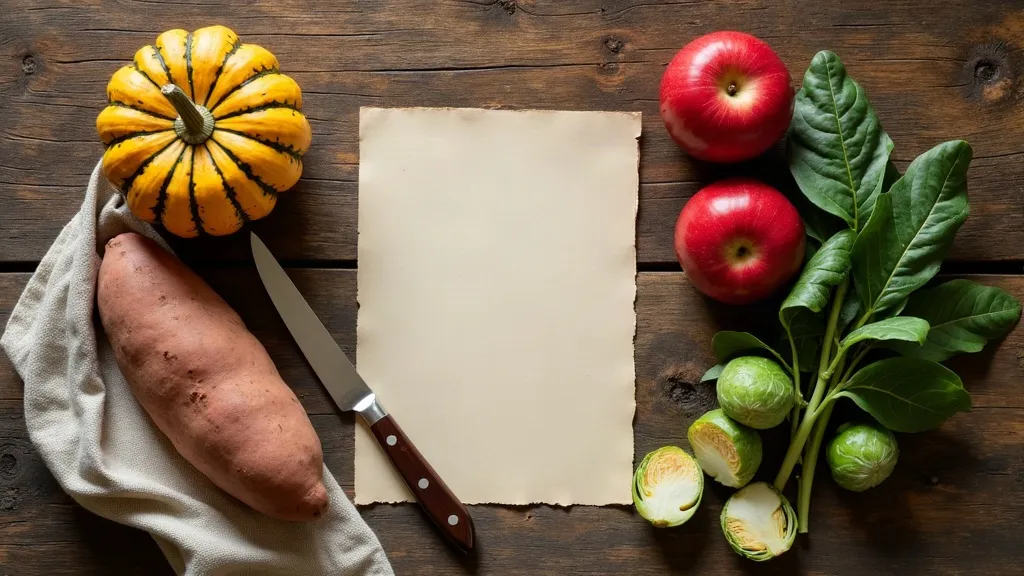
As September turns to October, grocery shelves shift: berries fade, squash and apples take over. Nutrition educators call this the easiest season to try “eating seasonally” — and the public guidance behind the idea is simpler than the trend content suggests.
What “seasonal” means in official guidance
The USDA’s SNAP-Ed program publishes a Seasonal Produce Guide that lists which fruits and vegetables are typically in season each quarter, and frames seasonal buying as a way to get produce at its best flavor and often its best price. For fall, the guide lists items such as apples, Brussels sprouts, cauliflower, pumpkins, sweet potatoes and winter squash, depending on region.
The guide does not claim that out-of-season produce is unhealthy — frozen and canned options remain part of its recommendations year-round. Seasonality, in this framing, is about quality, cost and variety rather than rules.
Building the plate
Harvard T.H. Chan School of Public Health’s Healthy Eating Plate offers the structural half of the advice: roughly half the plate vegetables and fruits, a quarter whole grains, a quarter protein, with water as the default drink. Applied to the fall list, that maps to roasted squash or Brussels sprouts beside a whole grain, with an apple as the everyday dessert.
Neither source prescribes specific “superfoods” for autumn, and neither endorses the detox or cleanse programs that tend to resurface each season. The consistent message is variety, mostly plants, and drinks without added sugar.
A practical takeaway
For readers who want one change this season: swap one out-of-season side dish a week for something from the current seasonal list. It is a low-effort way to widen the range of vegetables on the table — which is what the guidance has recommended all along.
This summary is informational only; readers with specific dietary needs should consult a qualified professional.